
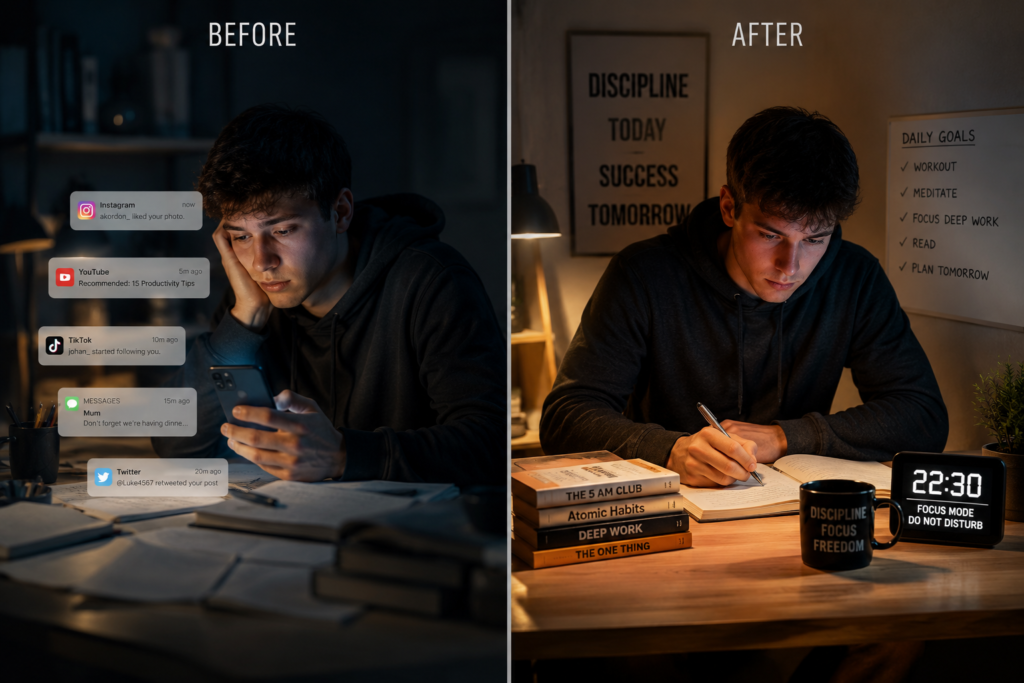
How many hours are you losing to your phone every day? No problem here the solution
How to Stop Wasting Time on Phone
In today’s digital world, smartphones have become a major part of our daily lives. While phones help us stay connected, learn new things, and entertain ourselves, they can also become one of the biggest reasons for wasting time. Many people spend hours scrolling through social media, watching short videos, or checking notifications without even realizing how much time is lost.
If you feel like your phone is controlling your day, don’t worry. With a few simple habits, you can reduce screen time and use your phone more wisely.
Why Do We Waste Time on Phones?
Phones are designed to keep our attention. Social media apps, games, and notifications constantly pull us back. Every notification gives our brain a small sense of excitement, making it difficult to stop checking the phone again and again.
Some common reasons include:
- Endless social media scrolling
- Watching random videos
- Fear of missing out (FOMO)
- Boredom
- Lack of clear goals
- Habit of checking the phone frequently
Understanding the reason is the first step toward changing the habit.
Signs You’re Spending Too Much Time on Your Phone
You may be wasting too much time on your phone if:
- You check your phone immediately after waking up
- You spend hours on social media daily
- You struggle to focus on work or studies
- You sleep late because of screen time
- You feel unproductive most days
- You use your phone even without any real purpose
If these habits sound familiar, it’s time to make some changes.
Simple Ways to Stop Wasting Time on Your Phone
1. Track Your Screen Time
Start by checking how many hours you spend on your phone daily. Most smartphones have built-in screen time tracking features.
Once you know where your time goes, it becomes easier to control it.
Tip:
Set a daily limit for apps like Instagram, TikTok, YouTube, or Facebook.
2. Turn Off Unnecessary Notifications
Notifications are one of the biggest distractions. Every small alert breaks your focus.
Disable notifications from:
- Social media apps
- Shopping apps
- Games
- Unnecessary promotions
Keep only important notifications like calls, messages, or work-related alerts.
3. Avoid Using Phone Immediately After Waking Up
Many people start the day by scrolling through social media. This wastes valuable morning energy.
Instead:
- Drink water
- Exercise
- Read a book
- Plan your day
- Practice meditation
A calm morning creates a productive day.
4. Keep Your Phone Away While Working
If your phone is near you, your brain automatically wants to check it.
Try these methods:
- Keep the phone in another room
- Use “Do Not Disturb” mode
- Turn the phone upside down
- Use focus apps to block distractions
Even one hour of distraction-free work can improve productivity.
5. Replace Phone Time with Better Habits
Simply reducing phone usage is not enough. Replace it with meaningful activities.
You can:
- Learn a new skill
- Exercise
- Start reading books
- Spend time with family
- Work on personal goals
- Practice hobbies
The more productive activities you have, the less attractive endless scrolling becomes.
6. Remove Addictive Apps
Some apps are designed to keep you hooked for hours.
Ask yourself:
“Does this app improve my life?”
If not, uninstall it or limit its usage.
Even removing one addictive app can save several hours every week.
7. Create No-Phone Zones
Set places or times where phone usage is not allowed.
Examples:
- During meals
- Before sleep
- During study time
- While talking with family
- In the morning for the first 30 minutes
These small rules help build discipline.
8. Sleep Without Your Phone Nearby
Using the phone before sleep affects both your sleep quality and mental health.
Instead:
- Keep the phone away from your bed
- Use a normal alarm clock
- Read a book before sleeping
Better sleep improves focus and reduces unnecessary phone usage during the day.
Benefits of Reducing Phone Usage
When you spend less time on your phone, you may notice:
- Better focus
- Improved productivity
- More free time
- Better mental health
- Improved sleep
- Stronger relationships
- Reduced stress
Small changes in screen habits can create big improvements in life
Final Thoughts
Your phone should be a tool that helps you, not something that controls your life. You don’t need to completely stop using your phone. The goal is to use it with purpose instead of wasting hours without realizing it.
Start with small changes:
- Reduce notifications
- Limit social media
- Focus on real-life activities
- Create healthy habits
Over time, these simple steps can help you become more productive, focused, and happier.
“Start today: Put your phone down for 30 minutes and focus on your future.”